
Fireflies in Uehara, Japan
10 firefly sightings have been logged in Uehara, Japan and shared here. The records here cover 17 calendar years, from 2010 to 2026.
- Sightings logged
- 10
- Species reported
- 2
- First logged
- Most recent
- Around
- 24.40, 123.79
What our records show
The records name 2 species: Pyrocoelia atripennis and Abscondita anceyi. The nearest place page, Taketomi, is about 5 km away and has 9 records. The busiest within 300 km is Taiwan, about 265 km away, with 40.
Species reported here
About the genus Pyrocoelia
Pyrocoelia fireflies live across East Asia, from the tropics to cooler regions. Their larvae are specialist hunters of land snails, able to stretch their heads deep inside a snail's shell to keep feeding. How brightly the adults glow differs from species to species.
The genus notes are our own short summaries of published descriptions and studies, including Sara Lewis, Silent Sparks (2016), and the papers that describe each genus.
About the genus Abscondita
Abscondita is a group of Asian fireflies that scientists separated from Luciola in 2013. It includes Abscondita anceyi, which has been recorded in the Philippines, and Abscondita terminalis of Southeast Asia and southern China.
The genus notes are our own short summaries of published descriptions and studies, including Sara Lewis, Silent Sparks (2016), and the papers that describe each genus.
When they have been seen
| January | February | March | April | May | June | July | August | September | October | November | December |
|---|---|---|---|---|---|---|---|---|---|---|---|
| 0 | 0 | 0 | 0 | 1 | 0 | 1 | 1 | 3 | 4 | 0 | 0 |
Most reported in October.
70% of these 10 records were made in September and October. So far, records fall in only 5 of the twelve months.
This shows when 10 records were made, not when fireflies fly. A place people only visit in one season looks seasonal for that reason alone, so treat a thin month as “nobody looked” rather than “nothing there”.
Is tonight good for fireflies?
A rough guide only: fireflies like warm, still, dark nights, and rain, cold and bright moonlight quiet them.
When to see fireflies in other countries
Year by year
Fireflies have been logged here in 8 different years. The busiest year so far was 2010, with 2 records.
- 2010 2
- 2011 1
- 2012 1
- 2018 1
- 2020 1
- 2024 1
- 2025 2
- 2026 1
What has been seen here
| Species | Date | Source |
|---|---|---|
| Firefly (Lampyridae) | iNaturalist → | |
| Pyrocoelia atripennis | iNaturalist → | |
| Pyrocoelia atripennis | iNaturalist → | |
| Pyrocoelia atripennis | iNaturalist → | |
| Pyrocoelia atripennis | iNaturalist → | |
| Firefly (Lampyridae) | iNaturalist → | |
| Abscondita anceyi | iNaturalist → | |
| Firefly (Lampyridae) | iNaturalist → | |
| Pyrocoelia atripennis | iNaturalist → | |
| Pyrocoelia atripennis | iNaturalist → |
Nearby places with firefly records
Guided firefly tours nearby
Some of the biggest firefly displays in the world gather on mangrove rivers in Southeast Asia, and local guides take small boats out to see them. Choose a tour that keeps its lights off and its boat quiet. Bright lights and engine waves harm the trees the fireflies live in.
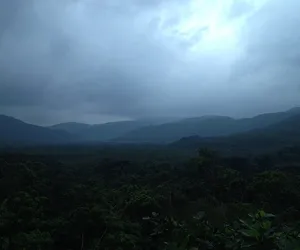
Iriomote Island, Okinawaabout 10 km away
A sunset on Iriomote Island, then a short walk into the forest at dusk to see the Yaeyama-hime firefly, a tiny firefly of these southern Japanese islands. Its season is short: March to May.
Photo: VKaeru, CC BY-SA 3.0
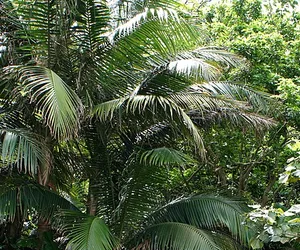
Ishigaki Island, Okinawaabout 40 km away
After sunset on Ishigaki Island, a guide takes you into the forest to watch the Yaeyama-hime, a tiny firefly named after these islands. They are out from March to June.
Photo: 663highland, CC BY 2.5
More night nature
Fireflies are not the only things that glow or come out after dark. These trips show other night life, and why dark skies matter for all of it.
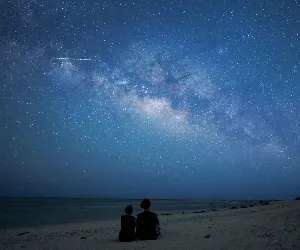
Ishigaki Island, Okinawaabout 40 km away
A guided walk into the subtropical forest of Ishigaki Island after dark, to meet the animals that come out at night, and on a clear night a sky full of stars. These islands' night sky is protected as a dark-sky park.
Not sure what you saw? Try the flash ID → · Planning a walk here? Read the guide →
Affiliate links: Alitaptap may earn a small commission from qualifying purchases, at no extra cost to you. It helps keep the map free.